I spent a weekend teaching a computer to draw my 2-year-old
· Mick Brzeziński
- generative AI
- weekend project
- build in public
A weekend project: teach a computer to draw my 2-year-old. It came out adorable, a few times absurd, and once genuinely a little bit magic.
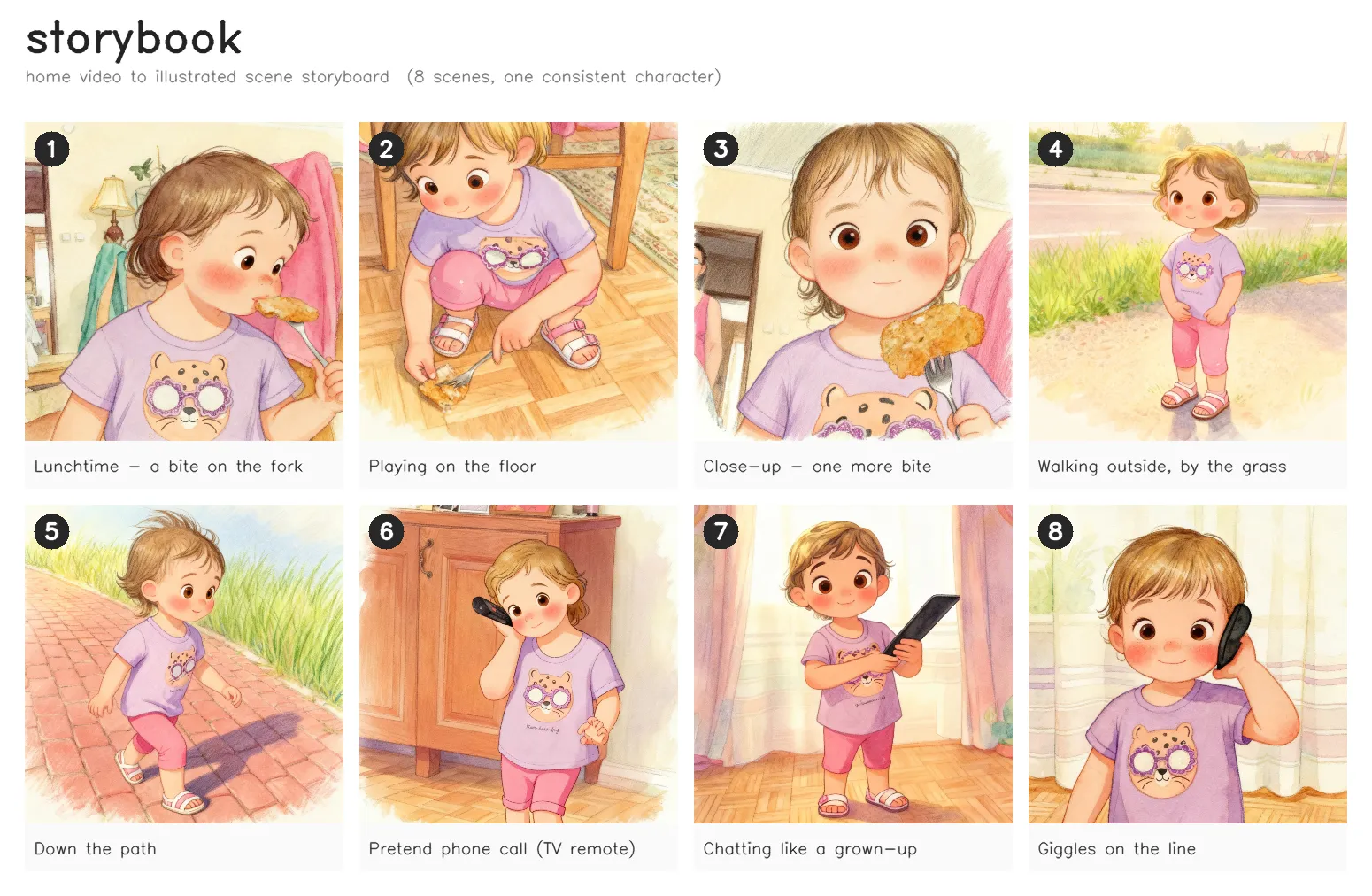
Every parent’s phone is a graveyard of clips nobody rewatches — my daughter eating lunch, toddling down a path, “talking” into a TV remote like it’s a phone. One weekend I pointed some AI at one, to see if it could turn it into a hand-painted storybook cartoon: same kid, same outfit, soft music underneath.
It mostly worked. The surprise wasn’t the cartoon — it was that the pipeline quietly figured out who she is.
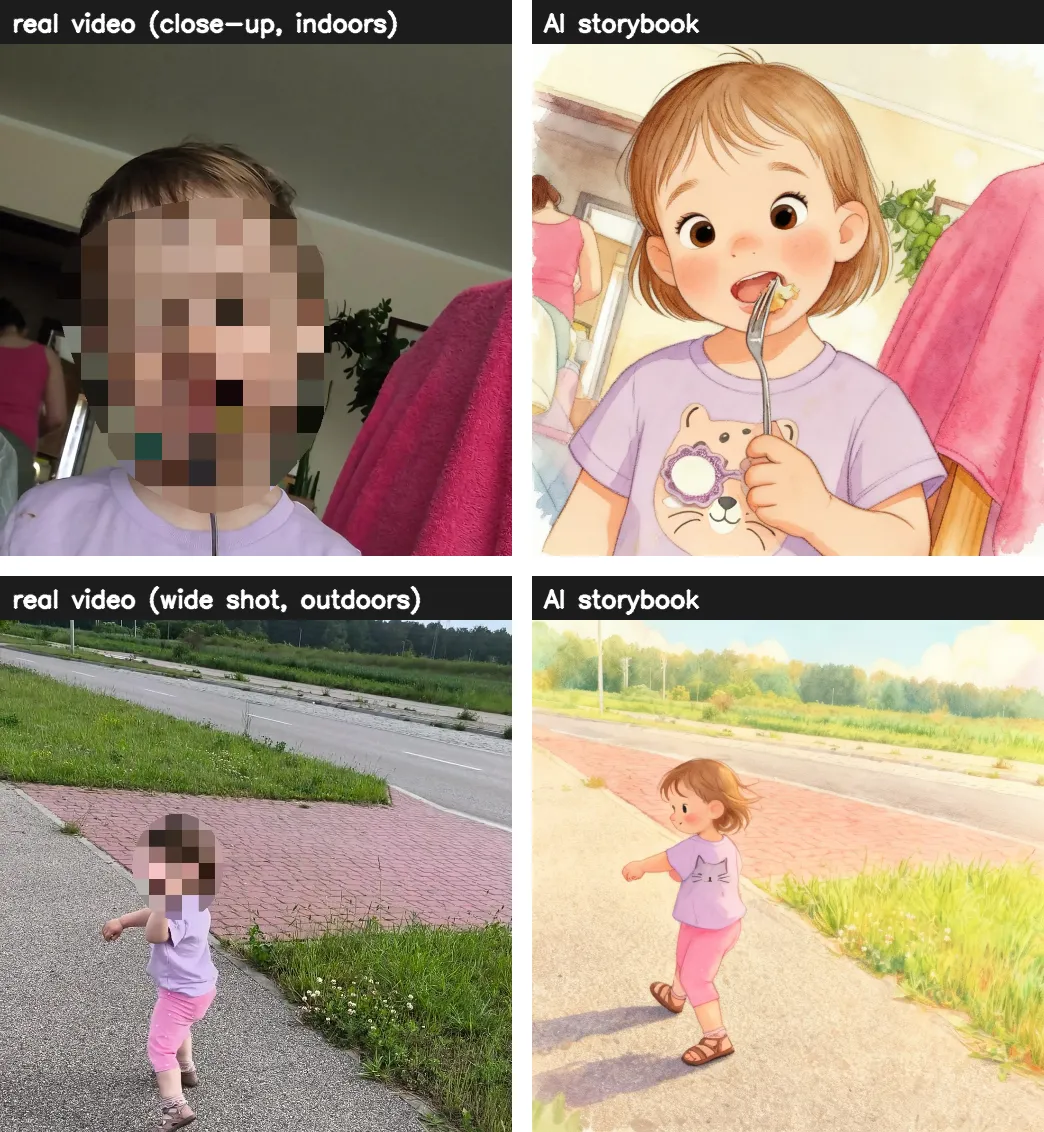
How it works
Five steps, and only the last one costs real money:
- It watches the clip scene by scene and writes what happens in plain English — “toddler eats, then walks outside, then plays with a toy phone.”
- It picks her best angle — the clearest, best-lit, face-forward frame.
- It learns who she is — a “character bible”: age, hair, eyes, the lavender cat tee, the pink leggings.
- It draws, then stops, showing me the stills before spending a cent on animation. (The storyboard above is that pause.)
- It animates and scores — each scene moves with its first and last frame pinned to the drawing I approved, then a soft instrumental ties it together.
The receipt. The thinking — watching, choosing the frame, writing the bible — runs on a Claude subscription: $0 in tokens. The stills to review: ~$0.55. The full 40-second film: ~$8.20, in under seven minutes.
It’s a relay race, not one clever model: Claude watches and writes the bible, Seedream paints the stills, Seedance animates them, ElevenLabs adds the score. No single model is the magic — the glue between them is.
Where it went hilariously wrong
The bloopers are half the fun:
- It once gave me a different child — a confident, beautifully animated blonde girl in a forest. My daughter isn’t blonde and we don’t own a forest. One wrong API field had quietly swapped the job for “make something up” — and because the bad call succeeded and billed full price every time, it cost about $5 to find out why.
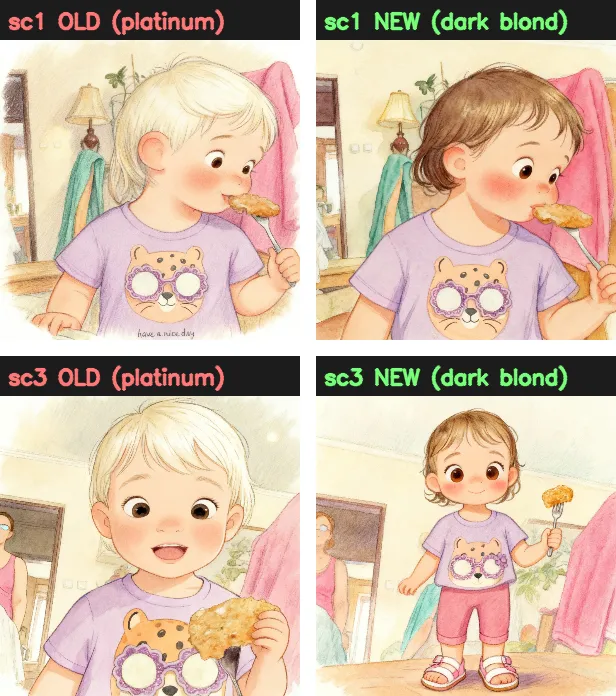
- It dyed her hair platinum. The reference frame was backlit; sunlight blew her hair out to white, the model wrote “platinum-blonde,” and that one fib spread to all eight scenes. Fix: only judge colour from well-lit frames.
- It kept redecorating — a tight close-up got “helpfully” completed into a full-body pose, and left alone the whole thing drifts to glossy 3D. You have to ask for the exact framing, and for hand-painted, every time.
A few things still wobble in the final cut: the cat on her shirt sometimes turns into a different animal, she reads a touch older in one scene, and the auto-generated sound effects are hit-or-miss. The music does the heavy lifting.
The honest bit, and the fun bit
It isn’t quite her yet. The outfit and vibe are spot on, but the face lands closer to “generic adorable storybook toddler” than my actual kid — each frame is painted on its own, held together by a written description rather than her real face, so she drifts a little from scene to scene. Pinning the actual child’s likeness onto the cartoon is the part still left to crack — the whole gap between “cute” and “that’s my girl.”
And yet:
The first film is a party trick. The fun is what comes after.
Capture that character bible once — and, one day, the real likeness with it — and the next clip (her birthday, the beach, grandma’s house) becomes episode two: same outfit, same world, same little hero. A personal Bluey, for about eight dollars an episode.
And the raw footage never leaves my storage — only the cartoon gets shared, her face blurred wherever a real frame shows. With a toddler, that part isn’t optional.